


Watson Bio Lab
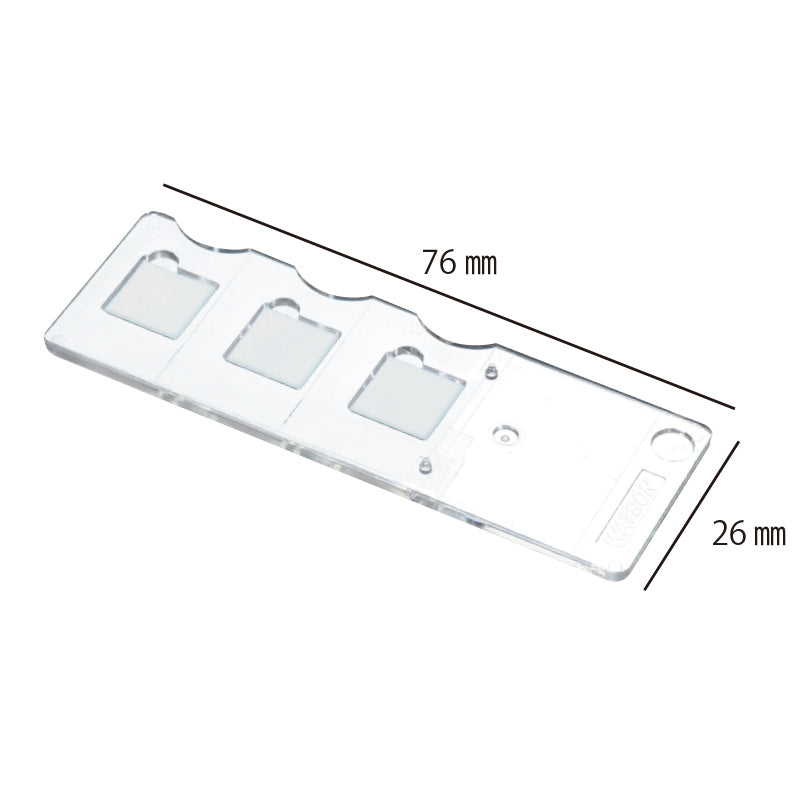
Preservation Plate, 3-well, Cellulose "176-301C" (10 pieces)
Preservation Plate, 3-well, Cellulose "176-301C" (10 pieces)
Volume:3 well
Unit:10 plates / unit
Couldn't load pickup availability
■Payment Methods Accepted:Credit Card / PayPal / Google Pay / Amazon Pay
■Delivery Fee:Free shipping fee in the U.S. - no minimum required
Contact Us View full details
About
Material plate:polystyrene
Samples such as blood can be preserved in a dry state. A new style of sample preservation.
- Space Saving
- Easy to transport and distribute
- Reduce Contamination Risk
- Recover Samples Directly on PCR Plate
Watson's Preservation Plate (cellulose type) has been developed in order to enable storage and transportation of such bioresources as blood under room temperature and pressure.
Simply place such samples onto paper chips, then dry, the preservation is completed.

Using PVP the samples remain in the same condition for every ISH providing you have preserved samples in a suitable amount for each experiment.
The preservation period is more than 4 months under normal temperature.

■Preservation of Samples

①Peel a protection film and expose paper chip surface.

②Get your sample absorbed into paper chips.
Up to max. 50μL can be pipetted.
③Dry in room temperature.
Dry the sample for at least 90 mins.
Reduced pressure drying is recommended.
Keep it under 50℃ when heat drying in order to prevent devices from deteriorating.
Make sure a sample to be preserved has resistance to the heat.
*Insufficient drying may result in faulty performance.

④Seal with PET protection film.
*Make sure that the film is tightly applied. Loose sealing may cause contamination.
⑤How to preserve
Avoid high temperatue, high humidity, strong lights for preservation. It is recommended to store the plate in a cool dark place with desiccants. High purity nucleic acid not contaminated by resolving enzyme etc. can be stored under room temperature.
Freezing is not recommended because of such risks as contamination off sample by dew condensation, or deterioration of sample by freezing and melting. Do not store under temperature less than -40 ℃ as it may deteriorate and damage devices.
Concduct half-life test as preservation time varies depending on sample's type, purity and environment.
■Extraction of Samples

①Peel a PET protection film.
②Peel off the paper chip, cut it into the required size and put it into a tube.

Elute by adding eluent and mixing.
In case of nucleotide, approx. 90% can be eluted in 3 minutes.
Paper chips can be directly put into a container, without the step to elute a sample if it is used as primer or probe.

【In case of PCR plate】
