


Watson Bio Lab
Microbial Preservation Plate for Bacteria, 1-well ,Sterilized "176-231S" (5 pieces)
Microbial Preservation Plate for Bacteria, 1-well ,Sterilized "176-231S" (5 pieces)
Volume:1 weii
Unit:5 pieces / unit
Couldn't load pickup availability
■Payment Methods Accepted:Credit Card / PayPal / Google Pay / Amazon Pay
■Delivery Fee:Free shipping fee in the U.S. - no minimum required
Contact Us View full details
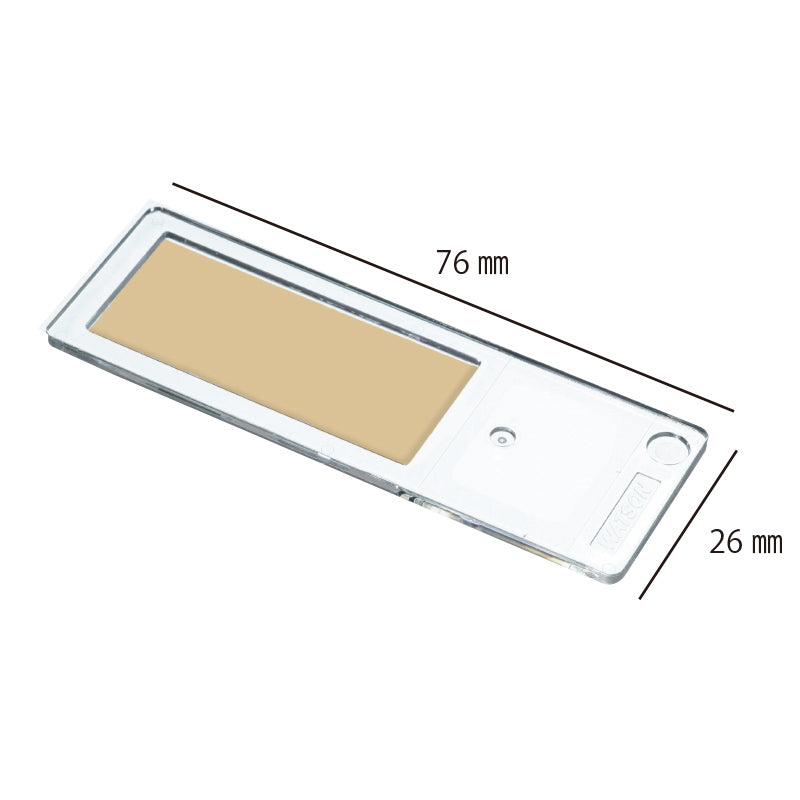
About
Material plate:polystyrene
Samples such as general bacteria can be preserved in a dry state. A new style of sample preservation.
- Space Saving
- Easy to transport and distribute
- Reduce Contamination Risk
- Recover Samples Directly on PCR Plate
Microbial strains such as general bacteria can be dry-preserved on a paper chip coated with a preservation agent.
Samples can be sealed individually with an accessory protection seal to prevent contamination and inactivation.
This enables compact and efficient preservation at room temperature - it is no longer necessary to use deep freeze or dry ice for transportation.
Note : When handling the specific pathogens, please act in accordance with the applicable laws and regulations in your county.
■Preservation of Samples

①Check a protection film and a plate in the package.
*Protective agent is spread on paper chips and it may appear as dot pattern but it does not affect the qualities.

②Get your sample absorbed into paper chips
A. For a liquid sample
Up to max. 200μL can be pipetted.
B. For a sample from agar
Pick microbial in colony from agar and spread on a paper chip.
③Dry in room temperature
Dry the sample for at least 90 mins. Reduced pressure drying is recommended.
*Insufficient drying may result in faulty performance.

④Seal with PET protection film
*Make sure that the film is tightly applied. Loose sealing may cause contamination.
⑤Freeze for long period preservation.
Bundle 2 plates with rubber band etc. in the way the film side of each plate faces to each other as film’s tackiness may weaken while freezing.
Microbial’s life in the plate may vary depending on type, urity and other conditions. Conduct half-life test on the sample where it is necessary.
■Extraction of Samples


